Vera Rubin NVL72 vs AMD Helios:
The Rack-Scale AI Factory War
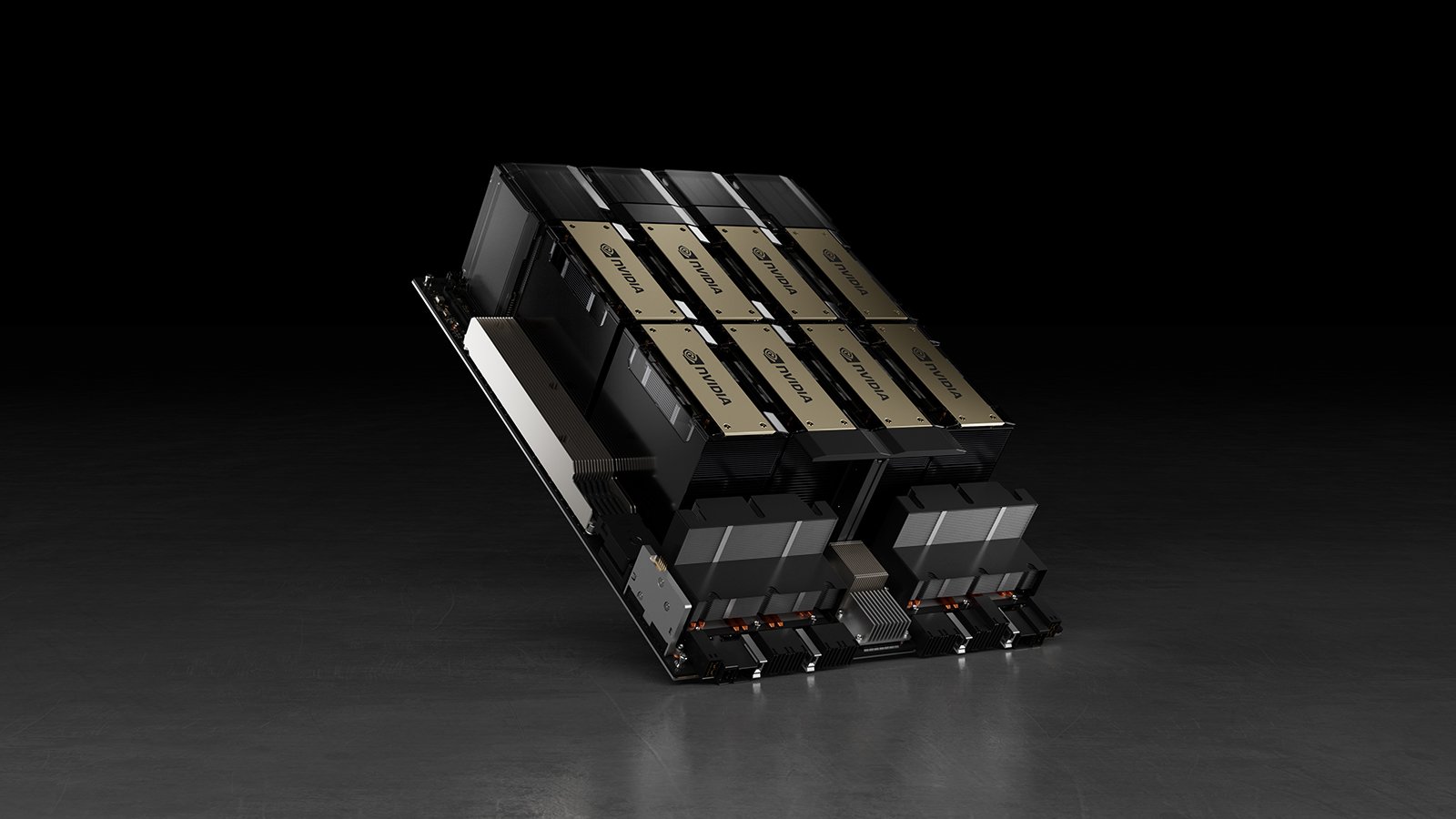
Vera Rubin
NVL72
AMD
Helios
The AI infrastructure game just went rack-scale. In a single week this July, NVIDIA announced Vera Rubin NVL72 is in full production (July 21) and AMD unveiled its Helios platform with MI455X GPUs (July 23). Both are liquid-cooled, 72-GPU rack-scale AI factories. Both promise multi-exaflop performance. But the architectures could not be more different. At BLD Quantiva, we break down what this means for your next AI infrastructure investment.
The Rubin Advantage: Ecosystem & Velocity
NVIDIA shipped Vera Rubin to CoreWeave, Microsoft, Google Cloud, AWS, and Oracle Cloud months before AMD's launch. With CUDA's 15-year head start, NVLink 6's 3.6 TB/s scale-up, and Vera CPU's 1.8 TB/s C2C link, Rubin is the plug-and-play path to 3.6 exaFLOPS. Installation takes 2 hours per rack. Q3 2026 volume is already committed.
The Helios Edge: More Memory, Open Standards
AMD's MI455X packs 432GB HBM4 per GPU — 50% more than Rubin's 288GB — and 23.3 TB/s bandwidth. At the rack level, Helios delivers 31TB of total HBM4. Add UALink open-standard networking, the mature ROCm ecosystem, and CDNA 5's 2nm+3nm hybrid process, and AMD has built a genuinely competitive AI factory on open infrastructure.
Head-to-Head: Rack-Scale Specifications
| Specification | Vera Rubin NVL72 | AMD Helios (MI455X) |
|---|---|---|
| GPU Architecture | Rubin (TSMC 3nm) | CDNA 5 (TSMC 2nm+3nm) |
| GPUs per Rack | 72 | 72 |
| CPU | 36x Vera (88 Arm cores, 176T) | EPYC Venice (Zen 6) |
| GPU Transistors | 33.6B | 320B |
| HBM4 per GPU | 288GB | 432GB |
| HBM4 Bandwidth | 22 TB/s | 23.3 TB/s |
| Total Rack HBM4 | 20.7 TB | 31 TB |
| FP4 Rack Compute | 3.6 exaFLOPS (NVFP4) | 2.9 exaFLOPS (MXFP4) |
| FP8 per GPU | 17.5 PFLOPS | 20.1 PFLOPS |
| FP16/BF16 per GPU | 4 PFLOPS | 5 PFLOPS (26% higher) |
| FP32 per GPU | 130 TFLOPS | 315 TFLOPS (2.4x) |
| Scale-Up Interconnect | NVLink 6: 3.6 TB/s bidirectional | UALoE: 3.6 TB/s bidirectional |
| Scale-Out Networking | 1.6 TB/s (Spectrum-X, ConnectX-9) | 600 GB/s (UALink) |
| CPU-GPU Link | 1.8 TB/s NVLink C2C (1:2 ratio) | 256 GB/s Infinity Fabric (1:1) |
| Cooling | 100% Direct Liquid Cooling | 100% Direct Liquid Cooling |
| Deployment Time | ~2 hours per rack | TBD |
| Software Ecosystem | CUDA (15+ years) | ROCm 7.0 (open source) |
| Shipping Status | Shipping Now (Q3 2026 volume) | Launched July 23, ramping H2 2026 |
The Architecture Split: Why These Platforms Are Not Directly Comparable
The most important insight from comparing these platforms is that they optimize for fundamentally different workloads. NVIDIA built Vera Rubin for the inference-flip era — where every chatbot reply, every coding assistant, and every autonomous agent action is an inference call running billions of times a day. The platform's 10x token throughput advantage over Blackwell on mixture-of-experts models, combined with Spectrum-X's 1.6 TB/s scale-out, makes it purpose-built for hyperscaler inference at planet scale.
AMD optimized Helios for memory-bound workloads. With 432GB HBM4 per GPU and 31TB across the rack, Helios can hold larger models entirely in GPU memory — eliminating the costly GPU-to-GPU data shuffling that dominates large-batch training. The MI455X's 315 TFLOPS of FP32 also makes it the superior platform for HPC-adjacent AI workloads where high-precision accumulation matters. AMD's bet is that memory capacity, not raw compute, will be the bottleneck of the next generation of frontier models.
The Real Decision: Ecosystem Maturity vs. Open Infrastructure
NVIDIA's biggest moat isn't silicon — it's CUDA's 15-year head start. Every major AI framework, every frontier model, and nearly every ML compiler targets CUDA first. Rubin drops into existing NVIDIA clusters with zero software friction. CoreWeave's first benchmark on Rubin showed 10x higher throughput per megawatt than Grace Blackwell on DeepSeek-R1 — a staggering efficiency gain. Vera Rubin is the safe bet, and safety matters when you're spending nine figures on infrastructure.
But AMD has closed the gap faster than anyone expected. UALoE matches NVLink 6 at 3.6 TB/s — a tie on the most critical interconnect spec. ROCm 7.0 now supports PyTorch, JAX, Triton, and SGLang natively. OpenAI, Meta, Anthropic, Microsoft, and Oracle have all committed to Helios deployments. The MI455X's 50% HBM4 advantage means models with large KV caches and long context windows run with fewer GPUs. For the 30%+ of the market that wants to avoid single-vendor lock-in, Helios with open UALink networking is the first credible alternative to NVIDIA's walled garden.
Choose Vera Rubin If...
- ▸ You need infrastructure shipping now, not Q4 roadmap promises
- ▸ Your team lives in the CUDA ecosystem and values zero-friction deployment
- ▸ Inference throughput is your primary cost driver (3.6 EF FP4)
- ▸ You run mixture-of-experts models that benefit from NVLink's 1.6 TB/s scale-out
- ▸ You need 2-hour rack deployment with robotic cable-less assembly
Choose Helios If...
- ▸ Memory capacity is your bottleneck — 432GB HBM4 per GPU dominates large models
- ▸ You want open-standard networking (UALink) to avoid proprietary lock-in
- ▸ You run HPC + AI hybrid workloads that need FP32 precision (315 TFLOPS)
- ▸ Cost per GB of HBM4 is your primary optimization target
- ▸ You're building for Q1 2027+ deployment and can wait for the ecosystem to mature
BLD Quantiva's Verdict
This is the most interesting AI hardware battle we've ever covered. For immediate deployment with maximum software compatibility, Vera Rubin NVL72 is the clear winner — it's shipping, it's fast, and CUDA is CUDA. The 10x inference throughput improvement on agentic AI workloads is genuinely transformative. If you're a hyperscaler or large enterprise deploying in 2026, Rubin is the answer.
But if you can wait until early 2027 and prioritize memory capacity, open standards, and FP32 performance, AMD Helios is the most credible NVIDIA alternative in a decade. The 432GB HBM4 per GPU isn't just a bigger number — it changes the economics of large-model serving. A model that needs 4 Rubin GPUs for memory might fit on 3 MI455X GPUs. At scale, that 25% reduction in GPU count is a seven-figure TCO advantage.
Our recommendation: if you're purchasing before Q1 2027, go Vera Rubin. If you're planning 2027 infrastructure, negotiate with both vendors. Competition has finally arrived at the rack-scale level — and that's the best thing that could happen to AI infrastructure buyers.
Get Real-Time Vera Rubin & Helios Pricing
Join our B2B Facebook group for daily inventory updates, wholesale pricing on NVIDIA Vera Rubin and AMD Helios racks, and direct access to our supply chain team.
Deploy Your AI Factory
BLD Quantiva sources and rigorously tests Vera Rubin NVL72 and AMD Helios rack-scale configurations. Whether you're building an inference cluster or a training supercomputer, our supply chain delivers globally.