B300 vs MI355X:
The 288GB Inference Showdown
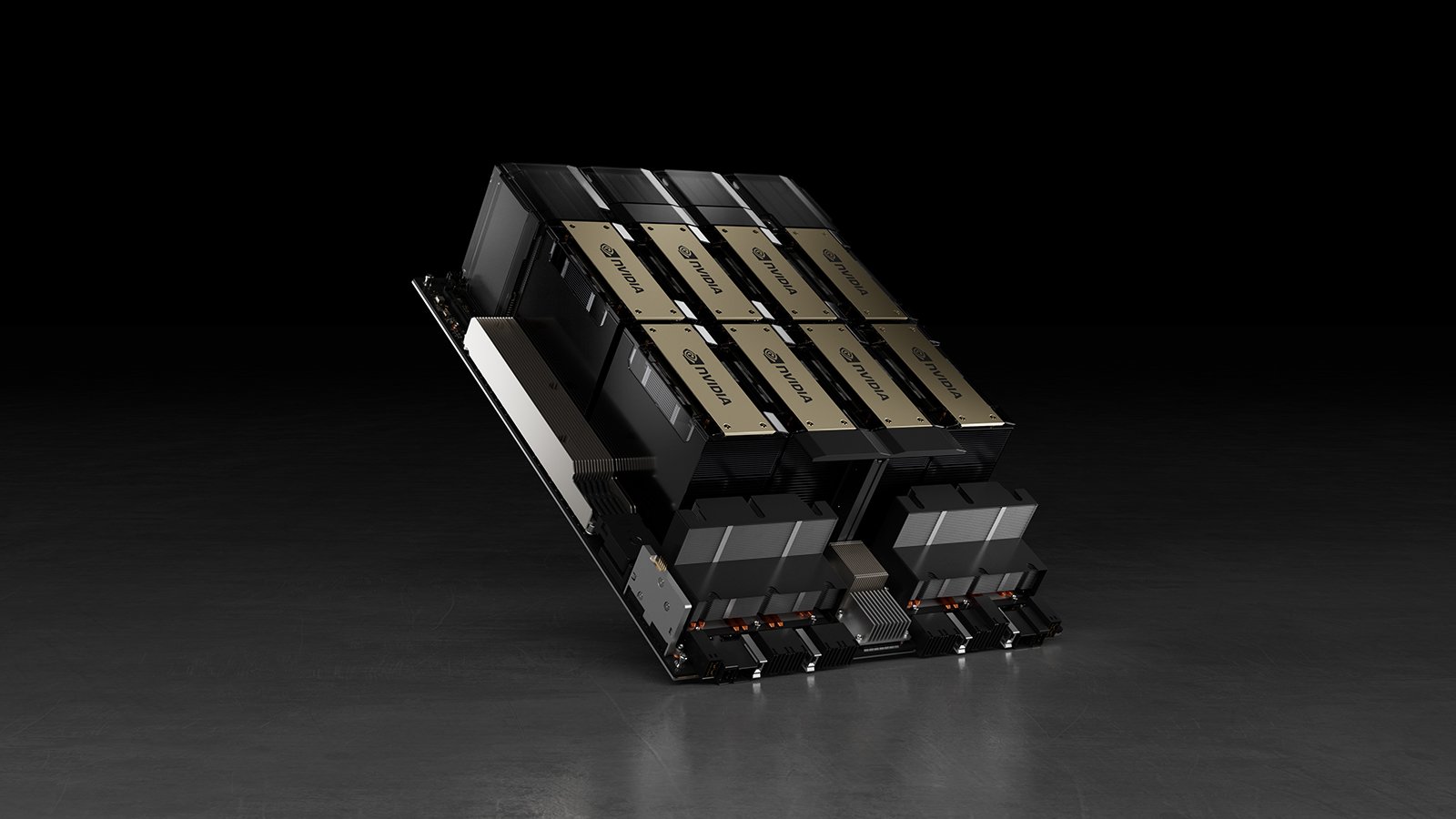
BLACKWELL ULTRA B300
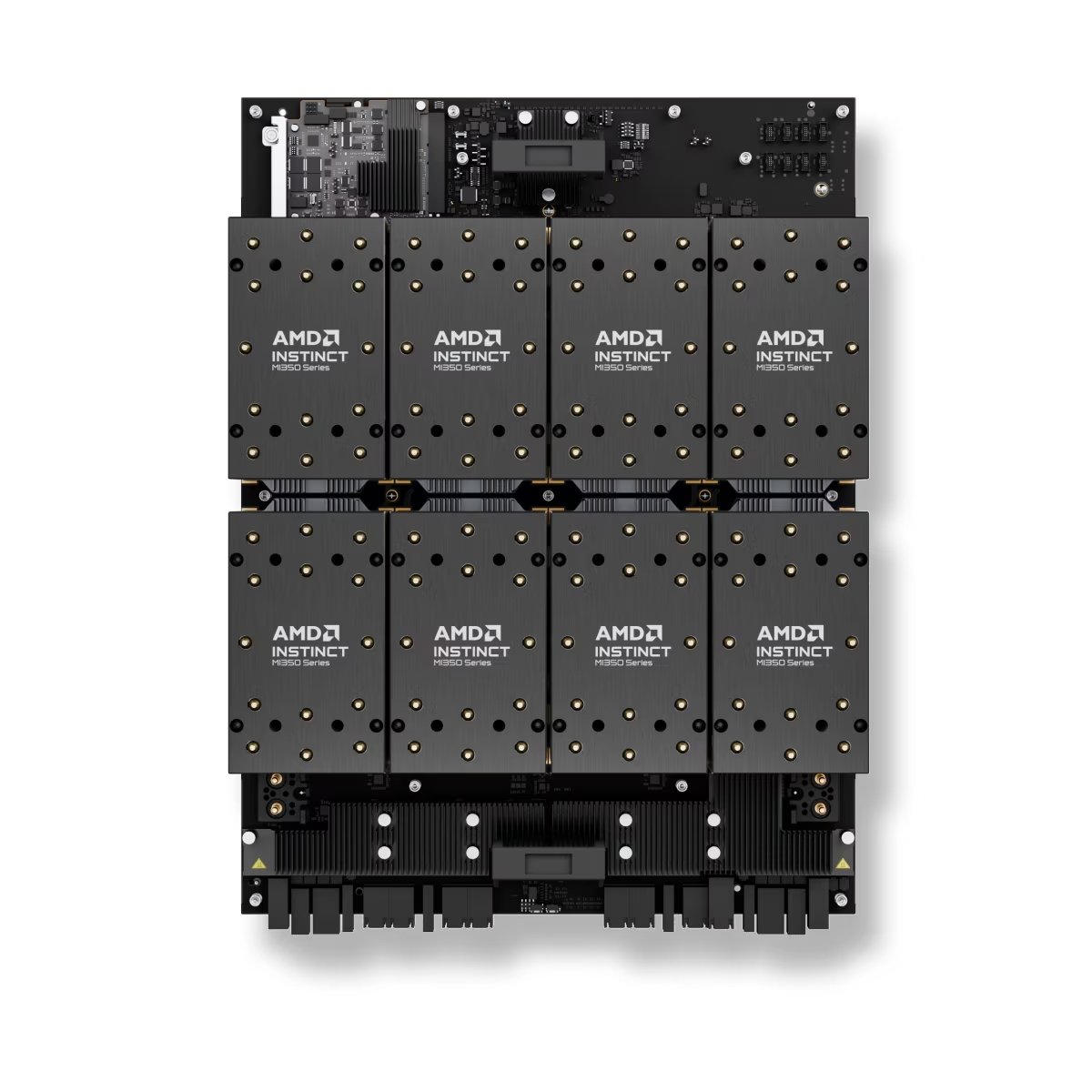
INSTINCT MI355X
The AI inference era has arrived, and with it, a new battleground has emerged. Both NVIDIA's Blackwell Ultra B300 and AMD's Instinct MI355X ship with a staggering 288 GB of HBM3e memory — identical on paper. So what actually separates the two most powerful AI accelerators on the planet? At BLD Quantiva, we break down the architecture, software stack, and total cost of ownership to help you make the right procurement decision.
NVIDIA B300
Blackwell Ultra / 288 GB HBM3e
- ✓ 15 PFLOPS FP4: Industry-leading low-precision compute with native NVFP4 support for maximum inference throughput.
- ✓ NVLink 5: 1,800 GB/s GPU-to-GPU bandwidth — double NVLink 4 — enabling 94% linear scaling in 8-GPU nodes.
- ✓ CUDA Ecosystem: Unmatched software maturity with TensorRT-LLM, vLLM, and NVIDIA Dynamo for distributed inference orchestration.
- ✓ Best For: Large-scale LLM inference, agentic AI workloads, trillion-parameter MoE models, and AI factory deployments.
AMD MI355X
CDNA 4 / 288 GB HBM3e
- ✓ Superior FP32: 157.3 TFLOPS of FP32 — over 2x the B300 — making it the efficiency leader for traditional HPC workloads.
- ✓ Open ROCm 6: Full open-source software stack with growing framework support, ideal for teams avoiding vendor lock-in.
- ✓ Lower TCO: Approximately 25% lower per-unit cost than B300 while matching memory capacity and bandwidth.
- ✓ Best For: HPC simulations, cost-sensitive AI training, mixed-precision workloads, and budget-conscious scale-out.
Specs at a Glance
When the memory specs are identical, the decision shifts to compute architecture, interconnect bandwidth, and software maturity. Here is how the two flagships stack up head-to-head:
| Specification | NVIDIA B300 | AMD MI355X |
|---|---|---|
| Architecture | Blackwell Ultra (4NP) | CDNA 4 (3nm / 6nm) |
| HBM3e Memory | 288 GB | 288 GB |
| Memory Bandwidth | 8.0 TB/s | 8.0 TB/s |
| FP8 Dense | 7.5 PFLOPS | 5.0 PFLOPS |
| FP32 | 75 TFLOPS | 157.3 TFLOPS |
| Interconnect | NVLink 5 — 1,800 GB/s | Infinity Fabric — 896 GB/s |
| TDP | 1,400 W | 1,400 W |
| Form Factor | SXM | OAM |
| Software Stack | CUDA / TensorRT-LLM | ROCm 6 / Open Source |
| Est. Unit Cost | ~$40K | ~$30K |
The Verdict: Ecosystem Dictates TCO
With both accelerators offering identical 288 GB HBM3e at 8 TB/s, the procurement decision comes down to three factors: compute precision, scaling bandwidth, and software maturity.
If your infrastructure is built around LLM inference, agentic AI, or trillion-parameter models, the NVIDIA B300 is the clear winner. Its 1.5x advantage in FP4/FP8 dense compute, combined with NVLink 5's 2x interconnect lead and the unmatched CUDA ecosystem, translates directly to higher tokens-per-megawatt and faster time-to-deploy. The DGX B300 platform — with 2.1 TB of total GPU memory and 144 PFLOPS of FP4 inference — lets you run 400B+ parameter models entirely in-memory.
However, if your workloads are FP32-heavy HPC simulations, or if you are operating under strict budget constraints where a 25% per-unit cost savings compounds across a full cluster, the AMD MI355X delivers exceptional value. Its 2x FP32 advantage and open ROCm stack make it a compelling choice for research institutions, national labs, and organizations prioritizing cost-per-FLOP over ecosystem convenience.
Connect with the Ultimate IT Sourcing Hub
Get real-time wholesale pricing on B300 & MI355X accelerators, daily inventory updates, and connect directly with our supply chain team.
Deploy Your AI Factory
Whether you are standardizing on NVIDIA Blackwell Ultra or betting on AMD CDNA 4, BLD Quantiva has the direct supply chain access to secure these flagship 288GB accelerators. Let our experts configure your ultimate AI infrastructure.